Heart Health and Hearing: What’s the Connection?

What Does Heart Health Have to Do With Hearing?

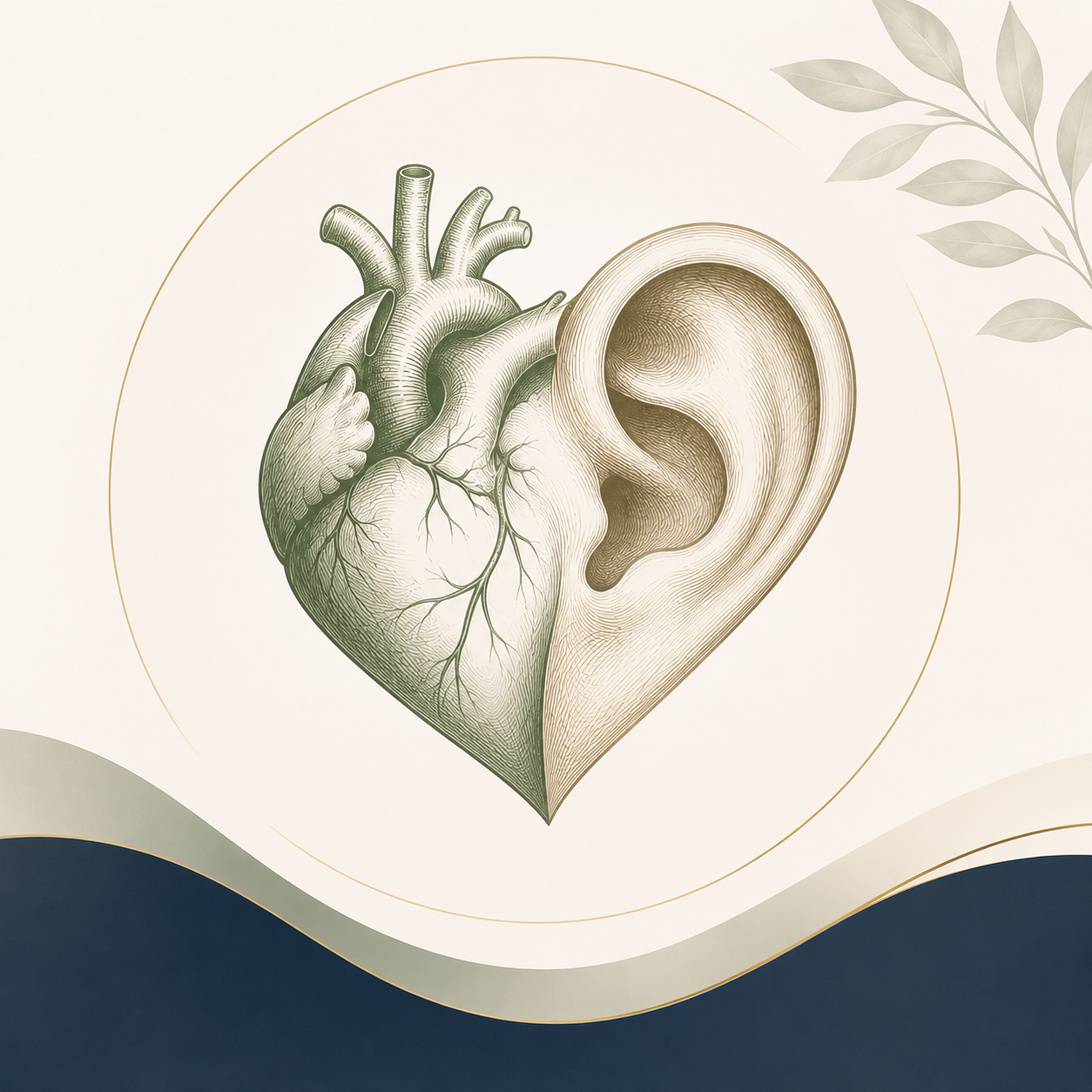
When we think about hearing loss, we often blame aging or noise exposure. But research shows there’s another important piece of the puzzle: heart health.


The inner ear relies on a rich network of tiny blood vessels to deliver oxygen and nutrients to the delicate sensory cells responsible for hearing. When cardiovascular health is compromised, that blood supply can be affected—and hearing may suffer as a result.


Large population studies have consistently found that people with cardiovascular disease, including stroke, coronary artery disease, and atherosclerosis, are more likely to develop hearing loss than those with healthy hearts.


Common cardiovascular risk factors also play a role. High blood pressure, diabetes, obesity, and smoking are all independently linked to both the onset and progression of hearing loss. Long-term studies show that people with higher overall cardiovascular risk tend to experience faster declines in hearing over time—especially when multiple risk factors are present.


Why does this happen? Conditions like hypertension and diabetes can damage both large and small blood vessels throughout the body, including those that supply the cochlea (the hearing organ). Reduced blood flow can impair inner-ear function, leading to sensory cell damage that may be permanent.

What This Means for You

Hearing loss may be more than just an ear issue—it can also be a sign of broader vascular health. Taking steps to protect your heart, such as managing blood pressure, controlling blood sugar, staying active, and avoiding smoking, may also help support long-term hearing health.


Regular hearing evaluations are an important part of healthy aging, especially for individuals with cardiovascular risk factors. If you have concerns about your hearing, our clinic is here to help guide you toward the next steps.

My must-have bolds would be the heart-health opening, the blood-supply connection, the four risk factors, “Reduced blood flow…,” and the first sentence under What This Means for You. Those tell almost the entire story even if someone only skims the page.

Share This Post

Ready for a more refined hearing experience?

Discover what’s possible when care is tailored to you.
Book a Consultation
By Magdalena Kujath August 17, 2026
Managing Tinnitus With Hearing Aids
By Magdalena Kujath August 17, 2026
The Connection Between Tinnitus and Hearing Loss
August 17, 2026
Workplace Noise: The Hearing Damage You May Not Notice
By Magdalena Kujath August 17, 2026
Bimodal Neuromodulation: An Exciting New Direction in Tinnitus Support
August 12, 2026
Discover how the speech banana helps explain your hearing test and why certain speech sounds may be harder to hear and understand.
April 24, 2026
Protecting Those Who Protect Us First responders—paramedics, firefighters, police officers, and frontline medical professionals—work in environments defined by urgency, unpredictability, and often, intense noise exposure. From sirens and engines to alarms and chaotic scenes, their hearing is constantly under strain. Yet, hearing health is an often-overlooked aspect of occupational wellness in this population. At its core, audiology care for first responders is about preservation, performance, and quality of life. Repeated exposure to high-decibel environments places first responders at increased risk of noise-induced hearing loss . Hearing conversation in the presence of background noise can become especially difficult for individuals with this type of hearing loss. Another critical concern is tinnitus , commonly described as ringing or buzzing in the ears. For many first responders, tinnitus can become a persistent companion. Hearing Protection That Works in the Real World Traditional hearing protection can be impractical in emergency situations where situational awareness is critical. Fortunately, modern solutions offer a balance between protection and performance. Custom filtered hearing protection is designed to reduce harmful noise while preserving the ability to hear speech and environmental cues. Advanced filtered earplugs and electronic protection systems allow first responders to remain fully engaged in their surroundings, without compromising long-term hearing health. Amplified Stethoscopes For many in healthcare and emergency medicine, auscultation is a vital diagnostic tool. Amplified stethoscopes provide enhanced sound clarity, allowing clinicians to detect subtle findings even in noisy environments or in the presence of mild hearing loss. These devices can be transformative—restoring confidence, improving diagnostic accuracy, and extending the longevity of a clinician’s career. Proactive Care Baseline hearing assessments and regular follow-up testing are essential for early detection and intervention. Audiologists can identify subtle changes and offer tailored strategies that support both hearing preservation and occupational performance. First responders play a vital role in keeping our communities safe, often in high-noise, high-demand environments. Through proactive care and precision-fit hearing protection, we can help safeguard their hearing without compromising performance. At Webster Street Hearing Boutique, our custom-fit earplugs are designed to protect against harmful noise while preserving critical situational awareness—supporting both safety on the job and long-term hearing health. For personalized hearing protection solutions, contact Webster Street Hearing Boutique at (902) 678-5550—our team would be pleased to guide you.