

Resources for
Healthcare Professionals
In response to requests from local healthcare professionals, we've created a collection of practical audiology resources to support you and your patients. Explore clinical information, patient education materials, referral guidelines, and tools to help identify and manage hearing concerns.
For Healthcare Providers
Five Communication Strategies to Start in your Practice Now
Patients with hearing loss often struggle most in clinical settings. Quiet one-on-one conversation is manageable, but rushed appointments, masks, exam room acoustics, and unfamiliar medical vocabulary make communication much harder. Below are five strategies any practitioner can start using right away:
1. Face the patient and reduce visual barriers.
Sit or stand directly facing the patient at a comfortable distance, ideally within 3 to 6 feet, before you begin speaking. Avoid talking while looking at the computer screen, writing in the chart, or facing away to grab equipment. If you wear a mask, consider a clear panel mask when discussing important information, since patients rely heavily on lip movement and facial expression to fill in what they miss.
Quick Tip: Make sure your face is well lit. Position the light in front of you rather than behind you so facial expressions and lip movements are easier to see.
2. Get their attention before you start talking.
Say the patient's name and pause until they're looking at you before delivering key information such as diagnoses, instructions, or medication changes. Starting to speak while walking into the room or while they're distracted means the first few words, often the most important ones, are lost.
Quick Tip: Before starting, make sure the patient is wearing their hearing aids and glasses, if applicable, and confirm they can hear you.

3. Slow down and don't shout.
Rather than raising your volume, speak at a slightly slower pace with clear articulation and natural pauses between sentences. Shouting distorts speech sounds and can feel demeaning. It doesn't actually improve clarity for most hearing losses.
Quick Tip: If the patient misses something, rephrase it rather than repeating the same words louder. A different word or sentence may be much easier to understand.
4. Reduce competing noise in the room.
Close the exam room door, turn off unnecessary equipment noise, and pause conversation if there's hallway commotion or an overhead announcement. Even a few seconds of background noise can cause a patient to miss critical instructions.
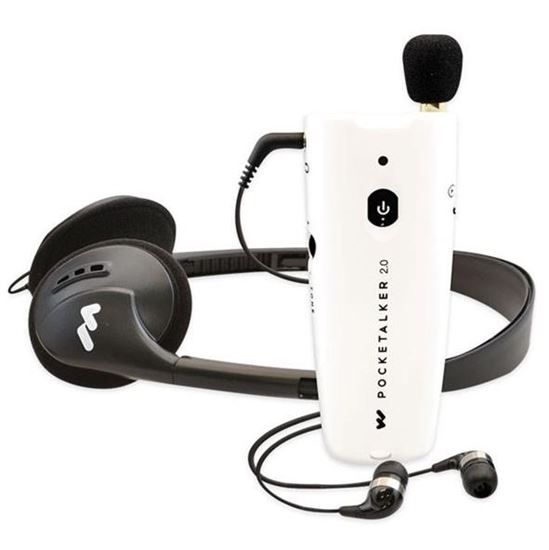
Quick Tip: For patients who are having significant difficulty, a portable assistive listening device such as a Pocketalker can make one-on-one communication much easier.
5. Confirm understanding and reinforce with written or visual backup.
Ask the patient to repeat back key instructions in their own words rather than simply asking whether it makes sense. Supplement verbal instructions with a written after visit summary, printed handout, or by pointing to information on a screen, so patients have something to reference later.
Quick Tip: When communication remains difficult, use pen and paper or speech-to-text on a phone or tablet to clarify important information in real time.