
Noise Exposure in Hospital Settings
Noise Exposure in Hospitals: What Healthcare Workers Should Know
Hospitals are not the first places that come to mind when we think of noisy work environments. However, operating rooms and other hospital settings can be surprisingly loud, exposing healthcare workers to noise that may affect their hearing, concentration, and overall well-being.
While some hospital sounds are essential for patient care, others may be unnecessarily loud or prolonged. Understanding the sources and effects of hospital noise is an important step toward creating a safer environment for healthcare professionals and patients alike.
How Loud Are Hospitals?
The World Health Organization (WHO) recommends keeping noise levels low in patient-care environments, with guidance suggesting levels should not exceed 35 decibels (dB) in most rooms where patients are treated or observed.
In practice, operating rooms can be considerably louder. Studies have reported sound levels ranging from approximately 51–79 dB, with certain surgical instruments producing substantially higher levels.
Although these sounds may not always be loud enough to damage hearing, ongoing background noise, conversations, alarms, and medical equipment can create a distracting and stressful environment.
When it comes to hearing damage, both the loudness of a sound and the length of exposure matter.
For example, the National Institute for Occupational Safety and Health (NIOSH) recommends limiting occupational noise exposure to an average of 85 dBA over an eight-hour workday. As noise levels increase, the recommended exposure time decreases.
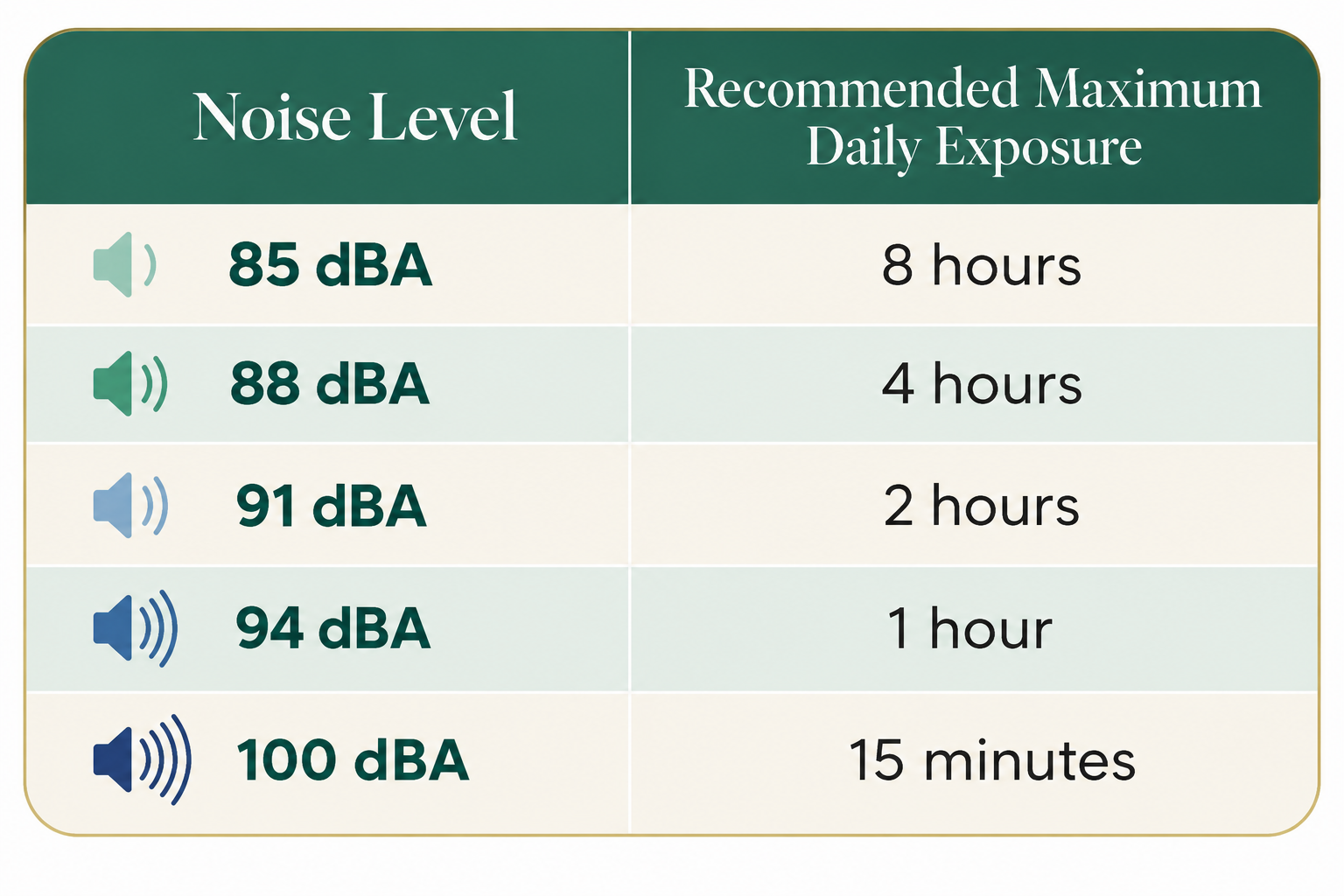
These examples are based on NIOSH recommendations for occupational noise exposure. They represent recommended exposure limits, not guarantees that hearing damage will occur. For healthcare professionals working long shifts or regularly using loud equipment, understanding cumulative noise exposure is particularly important.
Where Does Hospital Noise Come From?
Noise in hospitals comes from a variety of sources. While many are necessary for patient care, others can be reduced or better managed.
1. Medical Equipment
Surgical drills, saws, suction devices, patient monitors, and anaesthesia machines all contribute to noise in hospital environments. Some powered surgical instruments can produce particularly high sound levels.
2. Human Activity
Conversations between staff, movement throughout the hospital, and music played during procedures can contribute to overall noise levels.
3. Environmental Sounds
Ventilation systems, air conditioning, hallway activity, carts, and emergency alarms can create a constant background of sound.
The combined effect of multiple noise sources can make hospital environments more challenging, even when individual sounds do not appear particularly loud.

How Does Hospital Noise Affect Healthcare Workers?
Noise exposure can have effects beyond hearing loss. Research suggests that persistent or disruptive noise may contribute to increased stress, fatigue, and difficulty concentrating.
Possible effects include:
- Increased stress and anxiety
- Fatigue and listening effort
- Headaches
- Elevated blood pressure
- Irritability
- Difficulty concentrating and communicating
For surgical teams, these effects are particularly important. Surgery requires sustained attention, precise decision-making, and effective communication.
Excessive operating-room noise can increase cognitive demands and make it more difficult for team members to hear instructions or communicate clearly during procedures.
Noise can also affect patients by interfering with rest, increasing stress, and contributing to an uncomfortable care environment.
Which Healthcare Workers Are Most at Risk?
Healthcare professionals who regularly work with loud surgical instruments may face a greater risk of occupational noise-induced hearing loss.
These can include:
- Orthopaedic surgeons: Frequent exposure to powered saws, drills, and other surgical instruments.
- Otolaryngologists (ENT surgeons): Exposure to powered drills and other equipment during certain ear, nose, and throat procedures.
- Neurosurgeons: Potential exposure to high noise levels during procedures involving powered surgical tools.
- Anaesthesiologists: Repeated exposure to noise from surgical instruments, alarms, and equipment during lengthy or multiple procedures.
- Operating-room nurses and surgical teams: Prolonged exposure while assisting with procedures involving loud equipment.
Some surgical instruments can generate sound levels exceeding 85 dBA, with certain tools producing much higher levels during use.
However, the risk of hearing damage depends on the actual noise reaching the worker's ears, the duration of exposure, and how frequently these exposures occur.
Patient hearing protection may also be appropriate during selected high-noise procedures, provided it is safe, clinically appropriate, and approved by the surgical and anaesthesia teams.
How Can Hospitals Reduce Noise Exposure?
Reducing unnecessary noise can help protect hearing health while supporting communication, concentration, and patient care.
1. Choose Quieter Equipment
Where possible, select quieter surgical tools and medical equipment. Regular maintenance can also help prevent unnecessary noise caused by worn or poorly functioning components.
2. Incorporate Sound-Absorbing Materials
Acoustic ceiling tiles, sound-absorbing panels, and other noise-reducing materials may help manage background noise. Materials used in clinical environments must also meet appropriate infection prevention and safety requirements.
3. Monitor Workplace Noise Levels
Sound level meters and personal noise dosimeters can help identify areas or procedures where noise exposure may be excessive.
Regular monitoring allows hospitals to evaluate risks and determine where noise reduction measures may be needed.
4. Schedule Regular Hearing Assessments
Healthcare professionals who routinely experience hazardous occupational noise exposure may benefit from baseline and ongoing hearing assessments. Annual hearing monitoring is particularly important for workers enrolled in an occupational hearing conservation programme. Regular testing can help identify early changes in hearing and support timely intervention.
5. Use Appropriate Hearing Protection
Properly selected hearing protection can reduce exposure to hazardous noise. Options may include conventional earplugs, earmuffs, or specialized filtered hearing protection.
Filtered hearing protection may allow important speech and environmental sounds to remain audible while reducing certain noise levels.
In hospital settings, hearing protection must be chosen carefully so that staff can continue to hear critical alarms, instructions, and other patient-safety signals. Hearing protection should be part of a broader workplace noise management strategy rather than the only preventive measure.
Protecting Your Hearing Throughout Your Healthcare Career
Hearing health is an important part of workplace wellness, including for those who dedicate their careers to caring for others.
Although hospital noise cannot always be eliminated, identifying hazardous exposures, improving workplace practices, and monitoring hearing can help reduce long-term risks.
At Webster Street Hearing Boutique, our audiologists provide comprehensive hearing assessments, education about noise-induced hearing loss, and guidance on selecting appropriate hearing protection.
Whether you work in an operating room or another busy healthcare environment, taking a proactive approach to hearing health can help protect your ability to communicate and connect throughout your career. Call (902) 678-5550 to learn more or book an appointment with one of our audiologists.
Written by: Courtney Warmerdam, BA, MSc
Board-Certified Audiologist
Webster Street Hearing Boutique
Published: October 26, 2026
References:
- Li, X., Li, J., Xu, Z., Shang, Y., & Shi, H. (2025). Effects of operating room noise on patient outcomes and medical staff: A systematic review. Noise & Health, 27(126), 246–254.
- McLeod, R., Myint-Wilks, L., Davies, S. E., & Elhassan, H. A. (2021). The impact of noise in the operating theatre: A review of the evidence. Annals of the Royal College of Surgeons of England, 103(2), 83–87.
- Obeid, D. A., Assiri, H., AlShalawi, J., AlKhaldi, A., & AlZhrani, F. (2025). Hearing loss among otolaryngologist and healthcare workers: Case control study. American Journal of Otolaryngology, 46(4), 104635.
- Kwan, S. A., Lynch, J. C., DeFrance, M., Ciesielka, K. A., Rivlin, M., & Daniel, J. N. (2022). Risk of noise-induced hearing loss for orthopaedic surgeons. The Journal of Bone and Joint Surgery. American Volume, 104(23), 2053–2058.
- Fu, V. X., Oomens, P., Merkus, N., & Jeekel, J. (2021). The perception and attitude toward noise and music in the operating room: A systematic review. Journal of Surgical Research, 263, 193–206.
- Pearlman, R. T., & Sandidge, O. (2009). Noise characteristics of surgical space suits. Orthopedics, 32(11), 825.
- World Health Organization. Risks in Ambient Work Environment: Occupational Hazards in the Health Sector.
- National Institute for Occupational Safety and Health. (2024). Noise-Induced Hearing Loss.
- Canadian Centre for Occupational Health and Safety. Noise: Occupational Exposure Limits in Canada.
Share This Post
Ready for a more refined hearing experience?